The Difference Between Bioidentical HRT and Supplements, Explained
By Dr. Marcus Reed, MD · 7 min read · April 23, 2026
Few topics in women's health generate more confusion -- or more heated opinion -- than the question of hormone therapy versus supplements for perimenopause. Depending on who you ask, HRT is either a lifesaver or a risk, and supplements are either the safer alternative or a waste of money.
The reality, as is often the case in medicine, is more nuanced than either camp suggests.
Understanding the actual difference between these two categories -- what they do, how they work, who they're appropriate for, and how they can coexist -- is one of the most useful things a perimenopausal woman can do for her own healthcare.
What Is Bioidentical HRT?
"Bioidentical" refers to hormones that are chemically identical in structure to those produced naturally by the human body. The term applies to both FDA-approved pharmaceutical products and compounded preparations made by specialty pharmacies.
FDA-approved bioidentical hormones include products like estradiol patches, gels, and sprays, as well as micronized progesterone (sold under brand names like Prometrium). These are standardized, tested, and prescribed by physicians.
Compounded bioidentical hormones are custom-prepared by compounding pharmacies based on individual prescriptions. They are not FDA-approved as finished products, which means their potency, sterility, and consistency are not held to the same regulatory standard.
How HRT Works
HRT directly replaces the hormones that the ovaries are producing in declining or inconsistent amounts. It raises circulating levels of estradiol and/or progesterone, reducing the hormonal variability that drives most perimenopausal symptoms.
At adequate doses, HRT is effective for vasomotor symptoms (hot flashes, night sweats), sleep disruption driven by hormonal fluctuation, and vaginal atrophy. Long-term evidence also supports its role in bone density preservation and, when initiated near menopause, cardiovascular protection.
Who HRT Is and Isn't Appropriate For
HRT is not appropriate for everyone. It is generally contraindicated for women with a personal history of hormone-receptor-positive breast cancer, certain cardiovascular conditions, undiagnosed vaginal bleeding, or active liver disease.
For women without these contraindications -- particularly those in early perimenopause or recently postmenopausal -- the current medical consensus (reflected in guidance from the Menopause Society and the American College of Obstetrics and Gynecology) is that the benefits of HRT outweigh the risks for most healthy women under 60.
The decision, however, is individual and should be made in conversation with a physician who can evaluate your specific health history and risk factors.
What Are Perimenopause Supplements?
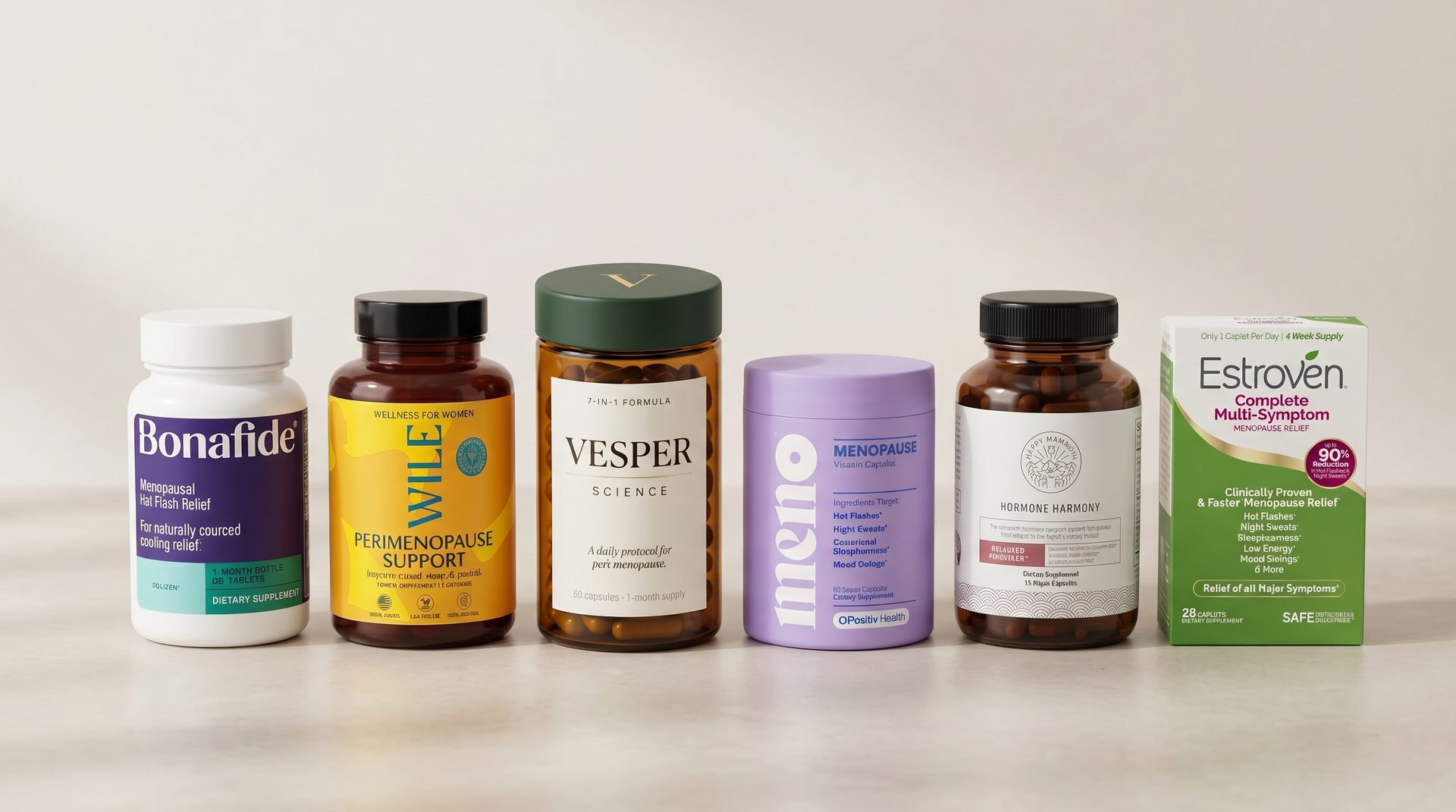
Perimenopause supplements are non-prescription formulas -- typically containing botanical extracts, vitamins, minerals, and other bioactive compounds -- that work by different mechanisms than hormone replacement.
They do not directly replace hormones. Instead, they work through pathways that influence how the body produces, metabolizes, and responds to its own hormones. They also address systems adjacent to hormonal function: the adrenal stress response, neuroinflammation, sleep regulation, and antioxidant defense.
How High-Quality Supplements Work
The most clinically credible perimenopause supplements are formulated around ingredients with peer-reviewed evidence in perimenopausal populations. Key categories include:
Phytoestrogens and SERM-like compounds: Plant-derived compounds that interact with estrogen receptors selectively, modulating estrogenic activity without replacing estrogen directly. Black cohosh, red clover isoflavones, and certain lignans fall into this category.
Adaptogenic herbs: Compounds like ashwagandha and Rhodiola that modulate the HPA axis (the body's stress response system), which becomes dysregulated during hormonal transition and contributes to fatigue, mood instability, and sleep disruption.
GABA-pathway support: Ingredients that support the calming, sleep-promoting effects of progesterone -- without requiring a prescription.
Antioxidant and anti-inflammatory compounds: Perimenopause is associated with increased oxidative stress, which compounds both vasomotor and cognitive symptoms. Targeted antioxidant support addresses this pathway directly.
The quality of evidence behind individual ingredients varies enormously. The most rigorous products are those where every ingredient is present at a dose that matches the clinical evidence -- not a token amount added for labeling purposes.
They Are Not Competing Categories
One of the most common misconceptions is that HRT and supplements are alternatives: that choosing one means rejecting the other.
Clinically, this is not how most well-informed practitioners think about the options.
The Case for Supplementation Alongside HRT
For women on HRT, a high-quality supplement formula can address the dimensions of perimenopause that HRT alone does not fully cover. HRT replaces estrogen and progesterone -- but it does not specifically target cognitive function, oxidative stress, or HPA axis regulation.
Many women on HRT continue to experience brain fog, fatigue, and mood fluctuation because these symptoms have components that are not purely estrogen-dependent. A comprehensive supplement addressing these additional pathways can meaningfully improve outcomes.
The Case for Supplementation Without HRT
For women who are not candidates for HRT, or who prefer not to use it, a well-formulated, clinically-backed supplement is not a consolation prize. For many women -- particularly those in early perimenopause with moderate rather than severe symptoms -- it is appropriate as a primary intervention.
The key word is "well-formulated." Not all supplements are equal, and the difference between a product with genuine clinical backing and a collection of underdosed botanical extracts is significant. Understanding what "clinically studied" actually means is essential to making a good choice.
The Questions Worth Asking
Whether you are considering HRT, supplements, or both, the questions that matter most are:
1. What is driving my specific symptoms? (Hormonal? Inflammatory? Sleep-related? All of the above?) 2. What are my personal risk factors and health history? 3. What does the evidence actually say about this specific product or compound -- not the ingredient in theory, but this formulation at this dose? 4. Am I addressing my symptoms comprehensively, or targeting one thing while others go unaddressed?
These are questions worth working through with a physician. They are also the questions that distinguish women who find meaningful relief from those who cycle through products without results.
This article is for informational purposes only and does not constitute medical advice. Decisions regarding HRT or any medical treatment should be made in consultation with a qualified healthcare provider.